 中文
 繁體中文
 日本語
 English
 Deutsch
 Español
 Français
 العربية
 Italiano
 한국어
 Nederlands
 Português
 Русский
 Türkçe
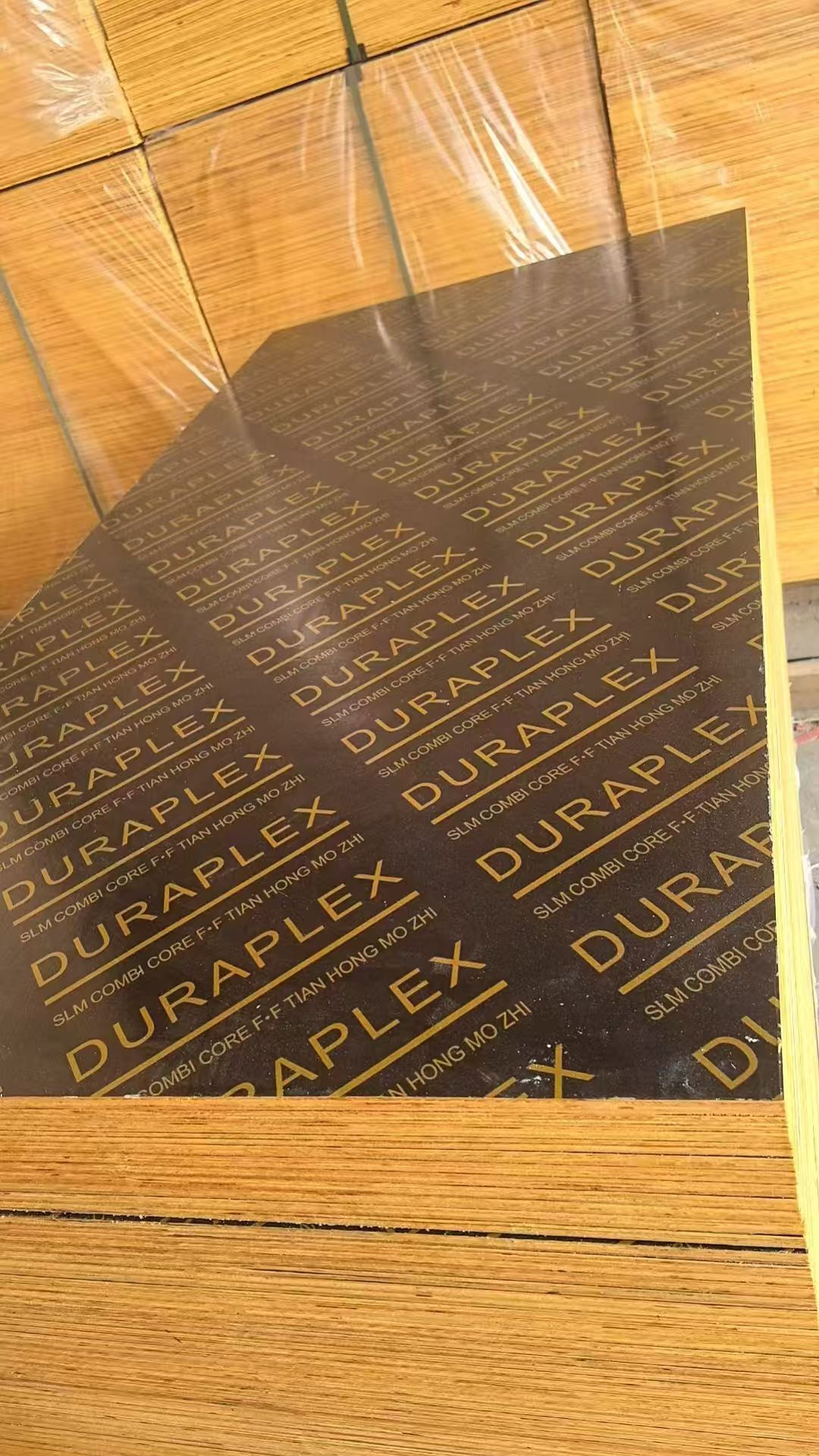
Q1: What is film-faced construction formwork? What is the difference from ordinary formwork?
A: Film-faced construction formwork is an engineered formwork made by covering the surface of a high-quality plywood substrate with a phenolic resin-impregnated film and bonding it under high temperature and pressure. Differences from ordinary formwork: ① The surface film layer is waterproof and wear-resistant and can be reused 20–30 times, while ordinary formwork can only be used 3–5 times; ② the surface of the poured concrete is smooth as a mirror, achieving a fair-faced concrete effect; ③ it is resistant to acids, alkalis and weathering, and is suitable for all kinds of construction environments.
Q2: What factors affect the reuse cycles of construction formwork?
A: The reuse cycles of construction formwork are affected by multiple factors: ① Film layer quality — resin impregnation amount and curing degree determine wear resistance and alkali resistance; ② core hardness — hardwood core (eucalyptus/birch) resists compression marks better than softwood core (poplar); ③ construction operations — proper stripping and timely cleaning of mortar residue greatly extend service life; ④ storage conditions — horizontal storage, protection from rain and moisture, avoiding direct sunlight; ⑤ release agent use — rational use protects the film layer.
Q3: How should the thickness and grade of construction formwork be selected?
A: The selection of construction formwork thickness must comprehensively consider the lateral pressure of concrete and the support spacing. The conventional thickness is 12–30 mm; 18 mm is the market mainstream. Grade selection recommendations: for low-rise housing (≤6 floors), choose 15 mm glue-coated board/film-faced board; for mid-to-high-rise buildings (7–18 floors), choose 18 mm high-quality film-faced board; for super high-rise buildings (≥30 floors), choose 18–20 mm high-strength film-faced board (hardwood core); for fair-faced concrete, choose premium film-faced board. The higher the required reuse cycles, the higher the grade that should be selected.
Q4: What is the difference between the surface colors of construction formwork?
A: The film color of construction formwork (black, brown, red) mainly differs in film paper material and brand identification; the color itself does not affect physical performance. Different manufacturers use different colors as brand distinctions, so when purchasing, attention should be paid to the quality of the film paper rather than the color.
Q5: How can the quality of construction formwork be identified?
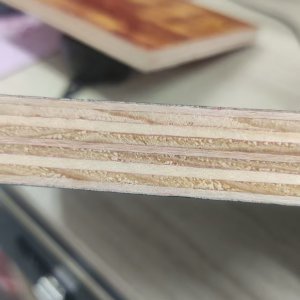
A: The quality of construction formwork can be identified from the following points: ① Check the surface — a high-quality film-faced board has a smooth and uniform surface, with no bubbles, depressions or scratches; ② check the board edge — the cut is neat, a dense glue layer is visible, and there are no voids; ③ check flatness — no obvious wave patterns under light; ④ perform a water drop test — place a few drops of water on the surface and leave for 2 hours; if the drops remain bead-shaped and do not penetrate, the quality is good; ⑤ request test reports — including boiling water test, bonding strength, surface wear resistance, etc.