 中文
 繁體中文
 日本語
 English
 Deutsch
 Español
 Français
 العربية
 Italiano
 한국어
 Nederlands
 Português
 Русский
 Türkçe
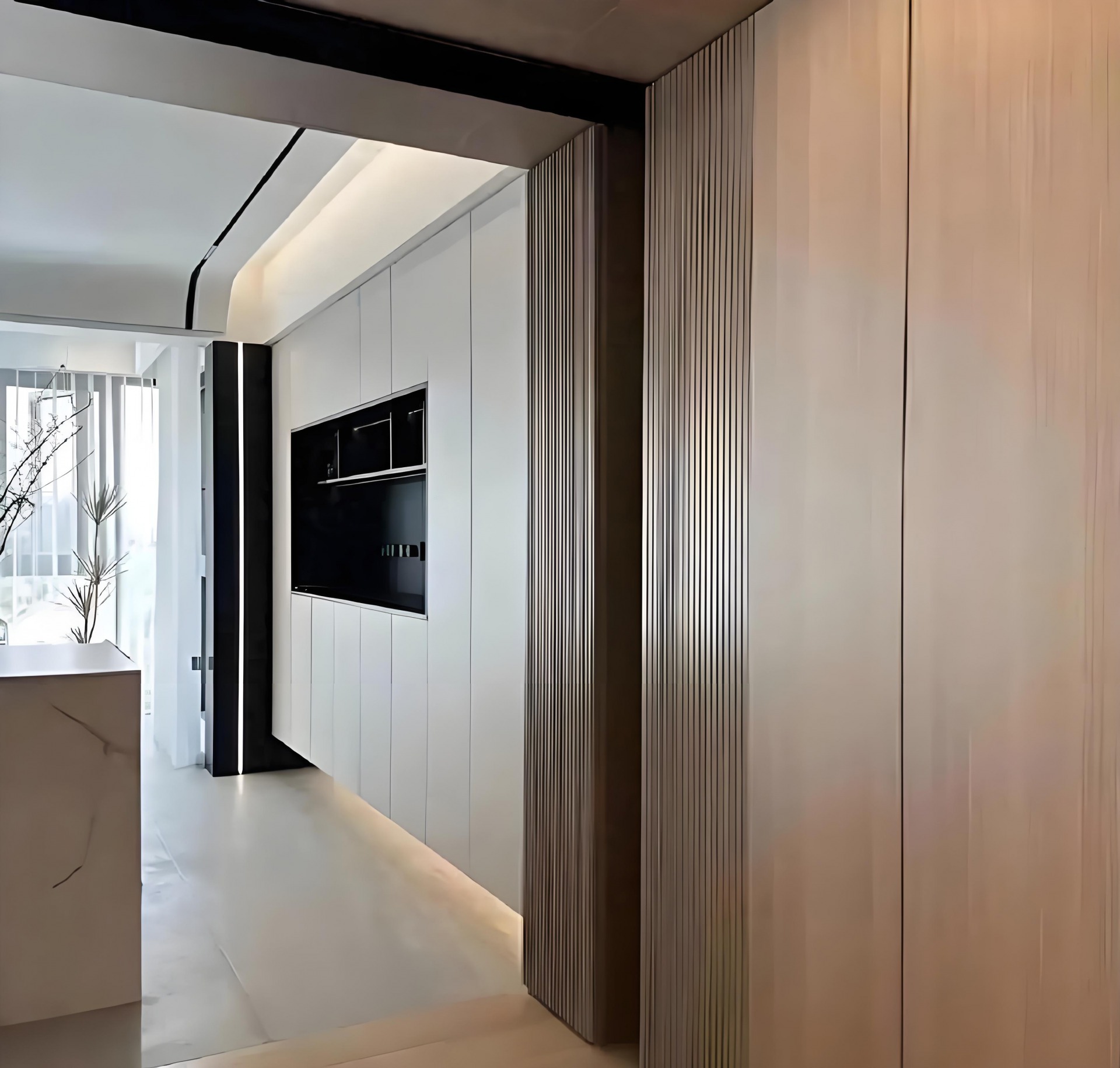
I. Evolution of the Wall Panel Concept: From "Protecting the Wall" to "Decorating the Home"
Wall panels (Wall Panel / Wall Cladding), in their traditional definition, refer to boards installed on wall surfaces for protection and decoration. Their history dates back to the wooden wainscoting of medieval European castles and manors — the original function was purely moisture-proofing, dirt-proofing, and impact protection, safeguarding expensive stone or plaster walls from daily wear and tear.
Entering the 21st century, with advances in materials science and evolving consumer demand, the product concept of wall panels has undergone profound changes:
Functional dimension: From single "physical protection" to a multifunctional composite of "environmental health + sound and thermal insulation + fire safety + smart integration"
Material dimension: From single solid wood to a diversified material system of "wood-plastic composite (WPC) + stone-plastic composite (SPC) + inorganic boards + metal composite"
Aesthetic dimension: From single wood grain to infinite possibilities of "imitation stone + imitation fabric + solid color + metallic texture + digital custom patterns"
Installation dimension: From "wet work (plastering + priming + adhesive)" to "dry construction + modular assembly + quick-install system"
Key data: According to the China Building Decoration Association, in 2025, China's wall panel market reached approximately RMB 28 billion, with new composite wall panels (WPC/SPC/inorganic boards) exceeding traditional wood wall panels for the first time, reaching over 55% market share, marking the industry's entry into the "new materials era."
II. Classification and Technical Analysis of New Wall Panel Materials
2.1 Wood-Plastic Composite Wall Panel (WPC Wall Panel)
Definition and composition:
Wood-Plastic Composite (WPC) wall panels are new eco-friendly boards made from wood/plant fibers (approximately 50-65%) and thermoplastic plastics (approximately 25-35%, mainly PVC, HDPE, or PP), with processing additives (coupling agents, lubricants, UV stabilizers, pigments, etc.), through high-temperature mixing and extrusion.
Technical principle:
The core technology of WPC lies in improving the interfacial compatibility between wood and plastic. Since wood fibers (polar, hydrophilic) and the plastic matrix (non-polar, hydrophobic) are naturally "incompatible" in chemical structure, the following methods are used to achieve organic combination:
Coupling agents (e.g., maleic anhydride grafted polymers, MAPE/MAPP): One end forms chemical bonds with hydroxyl groups on wood fibers, while the other end entangles with plastic molecular chains, acting as a "molecular bridge"
Wood fiber surface treatment: Through alkaline treatment, heat treatment, or silane coupling agents to reduce the polarity of wood fibers and improve compatibility with plastics
High-speed mixing + high-temperature plastification: At 150-200°C, plastic melts and encapsulates wood fibers; the strong shear force of the screw extruder achieves molecular-level dispersion
Production process:
Raw material preparation: Wood/bamboo powder is ground, dried (moisture content ≤3%), and screened (80-120 mesh). Plastic pellets (PVC/HDPE) are crushed to appropriate particle size
High-speed mixing: All raw materials are fed into a high-speed mixer according to the formula, with temperature raised to 110-130°C, so additives uniformly coat wood powder and plastic pellets
Pelletizing (optional): The mixture is processed into pellets by an extrusion pelletizer for subsequent molding
Extrusion: Pellets are heated and plastified in a conical twin-screw extruder (barrel temperature 160-200°C), and extruded through a die into profiles (flat panels, grilles, Great Wall panels, square tubes, etc.), with die temperature controlled at 170-190°C
Cooling and sizing: The extruded high-temperature profiles are rapidly cooled and sized in a vacuum sizing tank (water temperature 15-25°C) to ensure dimensional accuracy
Hauling and cutting: Uniform hauling by a caterpillar hauler, automatic cutting to the required length (usually 2.4-3.0 m)
Surface treatment (optional): Film lamination, heat transfer, spraying, or embossing to give patterns and tactile feel
Performance advantages of WPC wall panels:
| Performance Dimension | WPC Wall Panel Performance | Comparison with Solid Wood |
|---|---|---|
| Waterproof and moisture-proof | Water absorption ≤0.5%, no leakage | Far superior to solid wood (8-15% water absorption) |
| Anti-corrosion and anti-mold | Zero nutrient source, mold cannot grow | Solid wood inevitably molds in humid environments |
| Dimensional stability | Linear expansion coefficient ≤3×10⁻⁵/°C | Far superior to solid wood (obvious anisotropy) |
| Fire performance | Up to B1 (difficult to ignite), self-extinguishing | Solid wood is B2/B3 |
| Screw holding | Good (special pre-drilled hole design) | Excellent (but prone to cracking) |
| Service life | 15-20 years (normal use) | Indoor 5-15 years (depending on maintenance) |
Main types and shapes:
| Product Form | Characteristics | Applications |
|---|---|---|
| Great Wall Panel | Cross-section like battlements, uneven, strong lines | Modern living rooms, corridors, dining rooms |
| Grille Panel | Composed of parallel or vertical strips, light and airy | Feature wall decoration, partitions, ceilings |
| Square Tube / Tubular Panel | Hollow square or rectangular cross-section, can embed LED strips | Commercial spaces, showrooms, bars |
| Flat Panel (solid/hollow) | Flat surface, various finishes possible | Large-area wall covering, wainscoting |
2.2 Stone-Plastic Composite Wall Panel (SPC Wall Panel)
Definition and composition:
Stone-Plastic Composite (SPC) wall panels are new eco-friendly boards made from limestone powder (calcium carbonate, approximately 60-75%) as filler, PVC resin (approximately 20-25%) as binder, with stabilizers and processing additives, through high-temperature extrusion.
Technical principle:
The core difference between SPC and WPC lies in replacing organic plant fibers with inorganic mineral powder. The fundamental differences this brings:
Zero organic nutrient source → Completely eliminates biological damage such as mold, insects, and decay
Intrinsic stability of inorganic materials → Extremely low expansion coefficient (≤2×10⁻⁵/°C), close to ceramic tiles, superior dimensional stability to WPC
Higher density and hardness → Significantly improved impact resistance and compressive strength
Performance advantages of SPC wall panels:
| Performance Dimension | SPC Wall Panel Performance | Comparison with WPC |
|---|---|---|
| Density | 1.8-2.2 g/cm³ | Higher than WPC (1.0-1.4 g/cm³), denser |
| Hardness (Shore D) | 65-75 | Higher than WPC (55-65), more scratch-resistant |
| Water absorption | ≤0.1% | Lower than WPC (≤0.5%), completely impermeable |
| Fire rating | B1 (difficult to ignite) | Equivalent to WPC |
| Weight | Heavier (approx. 15-20 kg/m², 9mm) | Lighter (approx. 10-14 kg/m², 9mm) |
| Machinability | Good (cutting, grooving) | Better (nailable, sawable, planable) |
Structural design of SPC wall panels (multi-layer co-extrusion):
High-quality SPC wall panels use multi-layer co-extrusion, forming multiple functional layers in one pass:
UV coating (surface protection layer, thickness approx. 0.02-0.05 mm): UV-cured coating, provides scratch resistance, anti-fingerprint, and stain resistance. Hardness ≥3H (pencil hardness)
Wear layer (transparent PVC film, thickness approx. 0.1-0.3 mm): High-transparency PVC film, protects the decorative layer from abrasion
Decorative layer (printed film, thickness approx. 0.05-0.1 mm): High-precision printed patterns (wood grain, stone, fabric, etc.), using gravure printing, registration accuracy ≤0.15 mm
SPC base layer (thickness 3-8 mm): Stone-plastic composite body, provides mechanical strength and dimensional stability
Balance layer (back layer, thickness approx. 0.1-0.2 mm): Symmetrical structure with surface layer, prevents warping; some products have adhesive backing or pre-installed clips
2.3 New Inorganic Wall Panel (Calcium Silicate / Fiber Cement Board)
Definition and composition:
Inorganic boards made from siliceous materials (quartz sand/diatomite, approximately 40-50%) and calcareous materials (lime/cement, approximately 20-30%), with reinforcing fibers (cellulose fibers/glass fibers, approximately 5-10%), through pulping, forming, and high-temperature high-pressure autoclaving (180-200°C, 0.8-1.2 MPa, curing 8-12 hours).
Core features:
Class A fire rating: Non-combustible material, Class A combustion performance, a fundamental difference from all organic boards (WPC/SPC/wood)
Zero formaldehyde: No organic adhesives added, formaldehyde emission at "not detected" level
Ultra-high strength: Flexural strength ≥15 MPa, impact strength ≥3 kJ/m²
Excellent weather resistance: Freeze-thaw resistance, acid and alkali resistance, no aging, service life up to 30+ years
Limitations: High density (1.3-1.6 g/cm³), heavy weight (15-25 kg/m²), requires special tools (carbide) for processing, on-site cutting is more difficult than WPC/SPC, usually requires factory prefabrication or professional installers.
III. Installation Systems for New Wall Panel Materials
3.1 Dry Quick-Install System
Unlike traditional wet work (plastering → adhesive → bonding), new wall panels generally use dry quick-install systems:
Base treatment (wall leveling system):
Leveling battens (wood or light steel keels, spacing 400-600 mm), fixed to the original wall with expansion bolts
Height-adjustable leveling pieces to accommodate wall unevenness (adjustable range ±30 mm)
Or special leveling clips, directly installing hanging parts on the original wall without battens, saving thickness space (only 15-25 mm installation thickness)
Panel installation (modular assembly):
Snap-fit assembly (nail-free installation): Each wall panel has pre-formed snap structures (tongue and groove) on the sides; adjacent panels snap together without nails or glue. Installation sequence: Start from the wall corner, bottom to top, progressively advancing to the other side.
Hook-on installation (removable): Wall-mounted rails, panels with pre-installed hooks on the back, hung directly on the rails. Facilitates later inspection and replacement (e.g., replacing one damaged panel without removing the entire wall).
Adhesive installation (with leveling mortar): Suitable for walls with high flatness, using special structural adhesive (MS polymer or polyurethane) to directly bond panels to the wall.
Edge treatment:
Internal and external corners use matching edge trims (aluminum alloy or PVC)
Wall top and wall-floor junctions use closing strips or skirting boards
Switch sockets, air conditioning holes, and other through-wall positions use special embedded boxes and decorative covers
3.2 Installation Time Comparison
| Installation Method | Construction Period for 100 m² Wall | Worker Skill Requirement | Post-Maintenance |
|---|---|---|---|
| Traditional wet work (tile/stone) | 7-10 days | High (mason) | Very poor (destructive removal required) |
| Traditional wood wall panel | 5-8 days | High (carpenter) | Average |
| WPC/SPC quick-install system | 2-3 days | Medium (after training) | Excellent (single panel removable and replaceable) |
IV. Technical Performance Comparison of New Wall Panel Materials
4.1 Comprehensive Performance Comparison Table
| Performance Indicator | WPC Wall Panel | SPC Wall Panel | Inorganic Wall Panel (calcium silicate/fiber cement) | Traditional Solid Wood Wall Panel |
|---|---|---|---|---|
| Density (g/cm³) | 1.0-1.4 | 1.8-2.2 | 1.3-1.6 | 0.5-0.8 |
| Water absorption (%) | ≤0.5 | ≤0.1 | ≤0.5 | 8-15 |
| Fire rating | B1 (difficult to ignite) | B1 (difficult to ignite) | A (non-combustible) | B2/B3 (combustible) |
| Formaldehyde emission (mg/m³) | ≤0.025 (E0) | ≤0.025 (E0) | Not detected | ≤0.050 (glulam) |
| Flexural strength (MPa) | 20-35 | 25-40 | 15-25 | 40-70 (parallel to grain) |
| Installation method | Dry quick-install/adhesive | Dry quick-install (snap) | Dry/wet work | Dry/wet work |
| Surface pattern richness | Extremely rich (heat transfer/film) | Extremely rich (printed film + embossing) | Medium (coating/veneer) | Natural grain, limited options |
| Weight per m² (kg/m², 9mm) | 10-14 | 16-21 | 14-18 | 6-10 |
| Reference service life (years) | 15-20 | 20-25 | 30+ | 8-15 |
| Comprehensive cost (RMB/m²) | Medium | Medium-high | High | High |
4.2 Radar Chart Interpretation
| Performance Dimension | Best-Performing Material | Reason |
|---|---|---|
| Waterproof and moisture-proof | SPC (best) / Inorganic | Zero or extremely low water absorption, suitable for long-term use in bathrooms and basements |
| Environmental health | Inorganic (best) | No organic adhesives used, zero formaldehyde, zero VOCs |
| Installation convenience | WPC/SPC (best) | Lightweight, snap assembly, on-site cutting, ordinary workers can operate |
| Decorative effect | SPC (best) | High-precision printing + synchronized embossing, excellent realism, high color saturation |
| Weather and durability | Inorganic (best) | No aging, no degradation, freeze-thaw resistant, suitable for outdoor and extreme environments |
| Thermal and sound insulation | WPC (best) | Wood fibers provide natural low thermal conductivity and good sound absorption |
4.3 In-Depth Analysis of Key Performance
(1) Fire Performance
Fire performance is a core safety indicator for wall panels, especially for public buildings and high-rise residences:
Class A (non-combustible): Inorganic wall panels (calcium silicate/fiber cement). Suitable for hospitals, schools, hotels, shopping malls, high-rise residences, and other places with strict fire requirements. Does not burn, does not release toxic smoke, does not spread fire.
Class B1 (difficult to ignite): Flame-retardant treated WPC and SPC wall panels. Self-extinguishing — after the ignition source is removed, flames on the panel surface extinguish within seconds. Suitable for residences, offices, and general commercial spaces.
Class B2/B3 (combustible): Untreated solid wood wall panels. Fire hazard, restricted in public buildings in many countries.
Flame retardant mechanism (WPC/SPC): By adding phosphorus-nitrogen halogen-free flame retardants, heat release of water vapor (endothermic cooling) and formation of a dense carbonized layer (isolating oxygen and heat transfer) to inhibit combustion.
(2) Formaldehyde Emission
Inorganic wall panels: Zero formaldehyde (not detected). Inorganic mineral substrate, no adhesive needed, eliminates formaldehyde at the source.
WPC/SPC wall panels: Standard products reach E0 (≤0.025 mg/m³), high-end products reach ENF (≤0.015 mg/m³). Formaldehyde mainly comes from trace residual monomers and additives in PVC resin, but is fully volatilized by high-temperature extrusion (200°C).
Traditional wood wall panels (glulam/multi-layer solid wood): Depends on adhesive type — urea-formaldehyde products (E1/E0) may release formaldehyde; MDI formaldehyde-free products can reach ENF, but cost increases significantly.
(3) Weather Resistance
Indoor wall panels: Light fastness ≥4 (ISO 105-B02, 100 h xenon), ensuring no fading in long-term use.
Outdoor wall panels: UV aging resistance (2000 h xenon, color difference ΔE ≤3), freeze-thaw resistance (-20°C to +60°C, 50 cycles, no cracking), wind pressure resistance (≥2.5 kPa, suitable for high-rise building facades).
Inorganic wall panels and some high-end WPC products are suitable for outdoor use; standard SPC and indoor WPC are not recommended for direct outdoor exposure.
V. Surface Decoration Technologies for New Wall Panel Materials
5.1 Decorative Layer Technical Routes
The surface decoration effect of wall panels is one of the core factors for consumer choice. There are currently three mainstream technical routes:
| Technical Route | Process Principle | Effect Characteristics | Cost | Durability |
|---|---|---|---|---|
| Heat transfer (wood/stone grain) | High temperature (180-220°C) sublimates pattern from transfer film into panel surface coating | Clear and natural texture, tactile relief, but average wear resistance | Low | Medium (3-5 years, daily use) |
| Film lamination (PVC/PP decorative film) | Hot melt adhesive or co-extrusion bonds decorative film (PVC/PP) to substrate surface | Rich colors, synchronized embossing of patterns and textures, high realism | Medium | Good (5-8 years) |
| Digital direct printing (UV printing) | Industrial UV inkjet printer directly prints patterns onto panel surface and UV cures | Any pattern possible (customized), extremely high color saturation, resolution up to 1200 dpi | High | Good (requires protective coating) |
5.2 Surface Effect Classification
Glossy Finish: Gloss ≥85 GU, mirror effect, strong modern feel, requires high-precision wear layer and UV coating. Suitable for living room feature walls and commercial spaces.
Matt Finish: Gloss ≤15 GU, understated and soft, fine touch, not prone to fingerprints and scratches. Suitable for bedrooms, studies, and other private spaces.
Textile/Leather Texture: Soft touch of fabric or leather, formed by embossing rollers. Warm and comfortable, suitable for high-end hotels and clubs.
3D Embossing: Through deep embossing (embossing depth ≥0.2 mm), achieves strong three-dimensionality and realistic touch, especially natural reproduction of wood grain conduits and growth rings.
VI. Application Scenarios and Selection Guide for New Wall Panel Materials
6.1 Selection by Space Function
| Application Space | Environmental Characteristics | Recommended Products | Priority Performance |
|---|---|---|---|
| Living room/bedroom | Dry, high aesthetic requirements | WPC wall panel, SPC wall panel | Decorative effect, environmental friendliness, touch |
| Kitchen/bathroom | High humidity, high temperature, oil stains | SPC wall panel (waterproof), inorganic wall panel | Waterproof, easy to clean, fireproof |
| Basement/ground floor | Humid, large temperature differences | SPC wall panel, inorganic wall panel | Waterproof and anti-mold, dimensional stability |
| Hotel/commercial space | High traffic, high wear | SPC wall panel (with wear layer) | Wear resistance, easy maintenance, fireproof |
| Hospital/school | Dense personnel, high hygiene requirements | Inorganic wall panel (Class A fireproof, antibacterial coating) | Fireproof, antibacterial, zero formaldehyde |
| Outdoor/semi-outdoor | Direct sunlight, wind and rain erosion | Inorganic wall panel, dedicated outdoor WPC | Weather resistance, UV resistance, no aging |
6.2 Selection by Pattern and Style
| Design Style | Recommended Patterns | Surface Effect |
|---|---|---|
| Modern minimalist | Solid colors (white/gray/black/beige), micro-cement texture | Matte, fine texture |
| Nordic natural | Light wood grain (white oak, maple, beech) | Semi-matte, soft wood grain touch |
| New Chinese | Dark wood grain (walnut, ebony) | Semi-matte, deep wood grain, some distressed effect |
| Light luxury modern | Marble grain, metallic texture (brushed gold/silver) | Glossy, mirror or metallic luster |
| Industrial | Cement gray, rust grain, dark stone grain | Matte, rough texture, grainy |
VII. Technical Development Trends of New Wall Panel Materials
7.1 High Performance
Antibacterial and antiviral (Ag/TiO₂ coating): Functional coating containing silver ions or nano titanium dioxide (photocatalyst) on wall panel surfaces, antibacterial rate ≥99.9% against E. coli and Staphylococcus aureus, inactivation rate ≥99% against H1N1 and other viruses. Suitable for hospitals, schools, food processing plants, and other places with extremely high hygiene requirements.
Negative ion release (release rate ≥1000/cm³): Adding tourmaline and other natural mineral powders to wall panel formulations, continuously releasing negative oxygen ions, improving indoor air quality, purifying PM2.5 and formaldehyde.
Self-cleaning/anti-fingerprint (superhydrophobic surface, contact angle ≥110°): Through special nano-coating technology, water droplets roll in spherical form on the surface ("lotus effect"), dust and stains are not easy to adhere, daily cleaning only requires a damp cloth.
7.2 Intelligence
Embedded LED strips/light guide systems: Pre-set light guide grooves inside wall panels, can embed LED strips (12V/24V low-voltage safe power supply), achieving wall-washing effect with hidden light source, creating ambient lighting environment.
Sensing/smart dimming/color change (electrochromic or thermochromic): Using electrochromic (EC) or thermochromic materials, wall panel color can be adjusted by current or temperature changes, applied in high-end smart residences and conceptual commercial spaces.
Integration with smart home systems: Wall panels can embed sensors (temperature, humidity, light, sound) or control modules, serving as distributed sensing nodes for smart homes, achieving automatic environmental adjustment.
7.3 Green and Low Carbon
Bio-based plastic substitution: PLA (polylactic acid), PBAT (adipic acid-terephthalic acid-butylene glycol copolymer), and other biodegradable plastics are being tried in wall panels, reducing dependence on petrochemical resources.
Recycled material utilization: Using recycled plastics (post-consumer recycled PE/PET) and industrial by-products (fly ash, slag) as raw materials, reducing carbon footprint, in line with circular economy principles.
Carbon footprint certification: More and more wall panel products will conduct full life cycle (LCA) carbon footprint assessment. Carbon footprint values will become important parameters for product competitiveness, especially for the EU market (closely related to CBAM and PEF (Product Environmental Footprint) regulations).
Frequently Asked Questions (FAQ):
Q1: What are wall panels? How has the concept evolved from traditional to modern wall panels?
A1:
Wall panels (Wall Panel / Wall Cladding) traditionally refer to boards installed on wall surfaces for protection and decoration. Their history dates back to wooden wainscoting in medieval European castles and manors. The original function was purely moisture-proofing, dirt-proofing, and impact protection for expensive stone or plastered walls.
In the 21st century, the concept of wall panels has undergone profound changes:
| Dimension | Traditional Wall Panel | Modern Wall Panel |
|---|---|---|
| Function | Single physical protection | Eco-health + sound and thermal insulation + fire safety + intelligent integration |
| Material | Single solid wood | WPC + SPC + inorganic boards + metal composite |
| Aesthetics | Single wood grain | Stone imitation + fabric imitation + solid color + metallic texture + digital custom patterns |
| Installation | Wet work (plastering + priming + pasting) | Dry installation + modular assembly + quick-install system |
Key data:
According to the China Building Decoration Association, the Chinese wall panel market reached approximately 28 billion yuan in 2025. The market share of new composite wall panels (WPC/SPC/inorganic boards) exceeded that of traditional wooden wall panels for the first time, reaching over 55%, marking the industry’s entry into the “new material era.”
Key conclusion:
Wall panels have evolved from a single “wall protection” function into an integrated wall system solution combining decoration, environmental performance, fire safety, sound insulation, and intelligence.
Q2: What are WPC, SPC, and inorganic wall panels? What are the differences?
A2:
Comparison of the three mainstream new wall panel materials:
| Type | Full Name | Main Components | Core Features | Fire Rating | Density (g/cm³) |
|---|---|---|---|---|---|
| WPC Wall Panel | Wood-Plastic Composite | Wood/plant fibers (50–65%) + thermoplastic plastic (25–35%) | Waterproof and moisture-proof, rot-proof and mold-proof, dimensionally stable, good screw-holding strength | B1 (flame-retardant) | 1.0–1.4 |
| SPC Wall Panel | Stone-Plastic Composite | Limestone powder (60–75%) + PVC resin (20–25%) | Zero water absorption, high hardness, better dimensional stability than WPC | B1 (flame-retardant) | 1.8–2.2 |
| Inorganic Wall Panel | Calcium silicate/fiber cement board | Siliceous materials + calcareous materials + reinforcing fibers | Class A non-combustible, zero formaldehyde, ultra-high strength, excellent weather resistance | A (non-combustible) | 1.3–1.6 |
Key differences:
WPC: wood fibers + plastic, waterproof and moisture-proof, suitable for interior decoration.
SPC: stone powder + PVC, high density, high hardness, completely impermeable, suitable for kitchens, bathrooms, and basements.
Inorganic board: inorganic minerals + fibers, Class A fire rating, zero formaldehyde, suitable for hospitals, schools, and high-rise buildings.
Key conclusion:
WPC emphasizes wood texture and processability, SPC emphasizes waterproofing and hardness, and inorganic boards emphasize fire safety and environmental performance. Choose according to the application scenario.
Q3: How are fire ratings of wall panels classified? What grades do WPC/SPC/inorganic boards achieve?
A3:
Fire performance is a core safety indicator for wall panels, especially for public buildings and high-rise residences.
| Fire Rating | Material Type | Characteristics | Suitable Places |
|---|---|---|---|
| Class A (non-combustible) | Inorganic wall panels (calcium silicate/fiber cement board) | Does not burn, does not release toxic smoke, does not spread fire | Hospitals, schools, hotels, shopping malls, high-rise residences |
| Class B1 (flame-retardant) | Flame-retardant treated WPC and SPC wall panels | Self-extinguishing; after the flame source is removed, the flame extinguishes within seconds | Residences, offices, general commercial spaces |
| Class B2/B3 (combustible) | Untreated solid wood wall panels | Fire hazard | Restricted in public buildings in many countries |
Flame-retardant mechanism (WPC/SPC):
By adding phosphorus-nitrogen halogen-free flame retardants, heat exposure releases water vapor (heat absorption and cooling) and forms a dense carbonized layer (blocking oxygen and heat transfer), thereby inhibiting sustained combustion.
Key conclusion:
Inorganic boards can achieve Class A non-combustible, flame-retardant treated WPC/SPC can achieve Class B1, and solid wood wall panels are Class B2/B3. Public buildings should prioritize Class A inorganic boards.
Q4: What is the formaldehyde emission of wall panels? Are WPC/SPC/inorganic boards environmentally friendly?
A4:
Formaldehyde emission mainly depends on the substrate and adhesive:
| Type | Formaldehyde Emission | Explanation |
|---|---|---|
| Inorganic wall panel | Zero formaldehyde (not detected) | Substrate is inorganic minerals, no adhesive required, eliminating formaldehyde at the source |
| WPC/SPC wall panel | Standard E0 (≤0.025 mg/m³), high-end ENF (≤0.015 mg/m³) | Formaldehyde mainly comes from trace residual monomers and additives in PVC resin, but is fully volatilized during high-temperature extrusion at 200 °C |
| Traditional wooden wall panel | Depends on adhesive: urea-formaldehyde E1/E0 may release; MDI formaldehyde-free can reach ENF | MDI adhesive significantly increases cost |
Key conclusion:
Inorganic wall panels are zero formaldehyde, WPC/SPC can reach E0/ENF, and traditional wooden wall panels require attention to the adhesive type. When purchasing, look for test reports and environmental grade labels.
Q5: How are modern wall panels installed? What are the advantages of the dry quick-install system?
A5:
Modern wall panels generally use a dry quick-install system, completely different from traditional wet work:
Base treatment:
Leveling battens (wood or light steel, spacing 400–600 mm), fixed with expansion bolts.
Height-adjustable leveling pieces to adapt to wall unevenness (±30 mm).
Special leveling clips, no battens required, installation thickness only 15–25 mm.
Panel installation (modular assembly):
Locking assembly (nail-free installation): pre-formed locking structures on side edges; adjacent panels snap together without nails or glue.
Hanging assembly (removable): wall-mounted hanging strips and pre-installed hooks on the back of panels, convenient for later maintenance and replacement.
Adhesive installation: suitable for relatively flat walls, using MS adhesive or polyurethane adhesive.
Edge treatment:
Internal and external corners use matching edge strips (aluminum alloy or PVC).
Wall-ceiling and wall-floor junctions use closing strips or skirting boards.
Switches, sockets, and air-conditioning holes use dedicated embedded boxes and decorative covers.
Installation time comparison:
| Installation Method | 100 m² Construction Period | Worker Skill Requirement | Later Maintainability |
|---|---|---|---|
| Traditional wet work (tiles/stone) | 7–10 days | High (tiler) | Very poor (destructive removal required) |
| Traditional wooden wall panel | 5–8 days | High (carpenter) | Average |
| WPC/SPC quick-install system | 2–3 days | Medium (after training) | Excellent (single panel removable and replaceable) |
Key conclusion:
The dry quick-install system is fast, requires less skilled labor, and is easy to maintain later. It is one of the core advantages of modern wall panels.
Q6: What surface decoration technologies are available for wall panels? How to choose between heat transfer, film lamination, and digital direct printing?
A6:
Surface decoration is a core factor in consumer choice. There are three mainstream technology routes:
| Technology Route | Process Principle | Effect Characteristics | Cost | Durability |
|---|---|---|---|---|---|
| Heat transfer (wood/stone) | High temperature (180–220 °C) sublimates and penetrates the transfer film pattern into the surface coating | Clear and natural texture, tactile relief, average wear resistance | Low | Medium (3–5 years) |
| Film lamination (PVC/PP decorative film) | Hot-melt adhesive or co-extrusion bonds the decorative film to the substrate | Rich colors, synchronous embossing possible, high simulation | Medium | Good (5–8 years) |
| Digital direct printing (UV printing) | Industrial UV inkjet printer directly prints and UV-cures | Any custom pattern, extremely high color saturation, resolution up to 1200 dpi | High | Good (requires protective coating) |
Surface effect classification:
High gloss: gloss ≥85 GU, mirror effect, strong modern feel, suitable for living room feature walls and commercial spaces.
Matte: gloss ≤15 GU, low-key and soft, not prone to fingerprints, suitable for bedrooms and studies.
Textile/leather texture: soft touch, warm and comfortable, suitable for high-end hotels and clubs.
3D embossed: deep embossing (≥0.2 mm), strong three-dimensionality and realistic touch, especially for wood grain pores and annual rings.
Key conclusion:
Heat transfer is economical, film lamination offers good value, and digital direct printing is suitable for high-end customization. Choose surface effect according to design style and application scenario.
Q7: How to choose wall panels for different spaces? What is the selection guide?
A7:
Selection by space function:
| Application Space | Environmental Characteristics | Recommended Product | Priority Performance |
|---|---|---|---|
| Living room/bedroom | Dry, high aesthetic requirements | WPC wall panel, SPC wall panel | Decorative effect, environmental performance, tactile feel |
| Kitchen/bathroom | High humidity, high temperature, oil stains | SPC wall panel (waterproof), inorganic wall panel | Waterproof and moisture-proof, easy to clean, fire safety |
| Basement/first floor | Humid, large temperature difference | SPC wall panel, inorganic wall panel | Waterproof and mold-proof, dimensional stability |
| Hotel/commercial space | High traffic, high wear | SPC wall panel (with wear layer) | Wear resistance, easy maintenance, fire safety |
| Hospital/school | Dense crowds, high hygiene requirements | Inorganic wall panel (Class A fire rating, antibacterial coating) | Fire safety, antibacterial, zero formaldehyde |
| Outdoor/semi-outdoor | Direct sunlight, rain and wind erosion | Inorganic wall panel, special outdoor WPC | Weather resistance, UV resistance, no aging |
Selection by color and style:
| Design Style | Recommended Color | Surface Effect |
|---|---|---|
| Modern minimalist | Solid colors (white/gray/black/beige), micro-cement texture | Matte, fine texture |
| Nordic natural | Light wood grain (white oak, maple, beech) | Semi-matte, soft wood texture |
| New Chinese | Dark wood grain (walnut, ebony) | Semi-matte, deep wood grain |
| Light luxury modern | Marble grain, metallic texture (brushed gold/silver) | High gloss, mirror or metallic luster |
| Industrial | Cement gray, rust texture, dark stone grain | Matte, rough texture |
Key conclusion:
For kitchens, bathrooms, and basements, choose SPC or inorganic boards. For living rooms and bedrooms, choose WPC or SPC. For hospitals and schools, choose inorganic boards. For outdoors, choose inorganic boards or special outdoor WPC. Style determines color and surface effect.
Q8: How do the comprehensive properties of new wall panel materials compare? Which is best?
A8:
Comprehensive performance comparison table:
| Performance Indicator | WPC Wall Panel | SPC Wall Panel | Inorganic Wall Panel | Traditional Solid Wood Wall Panel |
|---|---|---|---|---|
| Density (g/cm³) | 1.0–1.4 | 1.8–2.2 | 1.3–1.6 | 0.5–0.8 |
| Water absorption (%) | ≤0.5 | ≤0.1 | ≤0.5 | 8–15 |
| Fire rating | B1 (flame-retardant) | B1 (flame-retardant) | A (non-combustible) | B2/B3 (combustible) |
| Formaldehyde emission (mg/m³) | ≤0.025 (E0) | ≤0.025 (E0) | Not detected | ≤0.050 (glued wood) |
| Flexural strength (MPa) | 20–35 | 25–40 | 15–25 | 40–70 (parallel to grain) |
| Installation method | Dry quick-install/adhesive | Dry quick-install (locking) | Dry/wet work | Dry/wet work |
| Surface color richness | Very rich | Very rich | Medium | Natural texture, limited |
| Weight per m² (kg/m², 9 mm) | 10–14 | 16–21 | 14–18 | 6–10 |
| Reference service life (years) | 15–20 | 20–25 | 30+ | 8–15 |
| Comprehensive cost (yuan/m²) | Medium | Medium-high | Relatively high | High |
Best material by performance dimension:
| Performance Dimension | Best Material | Reason |
|---|---|---|
| Waterproof and moisture-proof | SPC wall panel / inorganic board | Zero or extremely low water absorption, suitable for long-term use in bathrooms and basements |
| Environmental health | Inorganic wall panel | No organic adhesive, zero formaldehyde, zero VOCs |
| Installation convenience | WPC/SPC wall panel | Lightweight, locking assembly, can be cut on site |
| Decorative effect | SPC wall panel | High-precision printing + synchronous embossing, excellent simulation |
| Weather and aging resistance | Inorganic wall panel | Does not age, does not degrade, freeze-thaw resistant |
| Thermal and sound insulation | WPC wall panel | Wood fibers provide natural low thermal conductivity and good sound absorption |
Key conclusion:
No single material is optimal in all aspects. For waterproofing, choose SPC. For environmental health and fire safety, choose inorganic boards. For decorative effect, choose SPC. For thermal and sound insulation, choose WPC. Choose according to core needs.
Q9: What surface treatment technologies are available for new wall panel materials? How to choose?
A9:
There are three main surface treatment technologies:
| Technology Route | Process Principle | Effect Characteristics | Cost | Durability |
|---|---|---|---|---|---|
| Heat transfer | High-temperature sublimation transfers the pattern into the surface coating | Clear and natural texture, tactile relief, average wear resistance | Low | Medium (3–5 years) |
| Film lamination | Hot-melt adhesive or co-extrusion bonds the decorative film to the substrate | Rich colors, synchronous embossing, high simulation | Medium | Good (5–8 years) |
| Digital direct printing (UV) | Industrial UV inkjet printing, direct printing and UV curing | Any custom pattern, extremely high color saturation, 1200 dpi | High | Good (with protective coating) |
Surface effect classification:
High gloss (≥85 GU): mirror effect, strong modern feel, suitable for living room feature walls and commercial spaces.
Matte (≤15 GU): low-key and soft, not prone to fingerprints, suitable for bedrooms and studies.
Textile/leather texture: soft touch, warm and comfortable, suitable for high-end hotels and clubs.
3D embossed (embossing depth ≥0.2 mm): strong three-dimensionality and realistic touch, especially for wood grain pores and annual rings.
Key conclusion:
Heat transfer is economical and practical, film lamination offers high cost-effectiveness, and digital direct printing is suitable for high-end customization. Choose surface effect according to design style and application scenario.
Q10: What are the future development trends of new wall panel materials?
A10:
New wall panel materials are developing toward high performance, intelligence, and green low-carbon:
1. High performance:
Antibacterial and antiviral (Ag/TiO₂ coating): antibacterial rate ≥99.9%, virus inactivation rate ≥99%.
Negative ion release (≥1000/cm³): adding tourmaline and other natural mineral powders to improve indoor air quality.
Self-cleaning/anti-fingerprint (superhydrophobic surface, contact angle ≥110°): lotus effect, dust and stains do not adhere easily.
2. Intelligence:
Embedded LED light strips/light guide systems: wall-washing effect with “light without seeing the source.”
Sensor/smart dimming/color change (electrochromic or thermochromic): color can be adjusted by current or temperature.
Integration with smart home systems: embedded sensors and control modules for automatic environmental adjustment.
3. Green and low-carbon:
Bio-based plastic substitution: PLA, PBAT and other degradable plastics are being tried in wall panels.
Recycled material utilization: recycled plastics (PE/PET) and industrial by-products (fly ash, slag) as raw materials.
Carbon footprint certification: full life cycle (LCA) carbon footprint assessment will become an important competitiveness parameter, especially for the EU market (closely related to CBAM and PEF regulations).
Key conclusion:
New wall panel materials are evolving from single decorative materials to functional, intelligent, and low-carbon system solutions, and will be deeply integrated into smart home and green building systems in the future.
JINDIWOOD · Engineered for Certainty —— From wall to space, from material to aesthetics, with certain quality and innovation, empowering the value of every wall.
This article is an original technical article by JINDIWOOD. Reproduction must indicate the source.